Приручник „Обука и оснаживање омладинских радника и едукатораради подизања свести у цивилном друштву о инклузији особа саинвалидитетом“
Приручник „Обука и оснаживање омладинских радника и едукатора ради подизања свести у цивилном друштву о инклузији особа са инвалидитетом“ развијен је као одговор на растућу потребу за инклузивним праксама у раду са младима и образовању.
Свеобухватна тема је социјална инклузија младих са инвалидитетом, којој се приступа кроз подизање свести, изградњу капацитета и активно ангажовање заједнице.
This manual is a comprehensive capacity-building resource designed for youth workers, educators, and organisations seeking to promote the inclusion of young people with disabilities through sports, outdoor, and leisure activities.
It provides both theoretical insights into diversity, inclusion, and disability awareness, as well as practical guidance, methodologies, and good practice examples for designing accessible and empowering programmes.
The manual aims to strengthen professional competences in inclusive youth work while supporting the creation of sustainable initiatives that foster active participation, social inclusion, and community engagement for young people with disabilities.
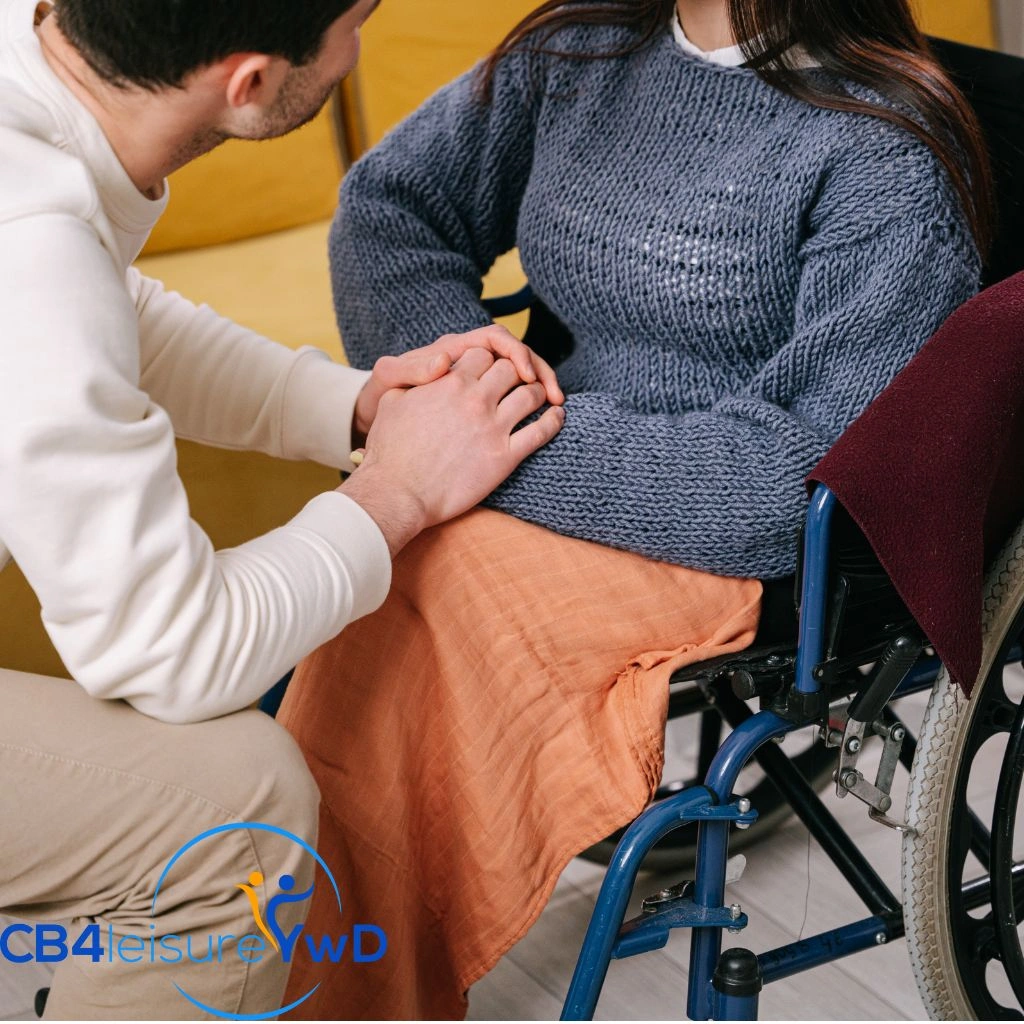
One of the most persistent and damaging assumptions in the way society relates to people with disabilities is this: that they are primarily recipients. People who receive help, care, accommodation and support. People whose presence in an activity or programme is something to be managed rather than welcomed.
This assumption shapes a great deal of youth work – often without anyone noticing. Programmes are designed for young people with disabilities as a special add-on to mainstream activities. Participation is offered as a form of charity rather than as a right. The language used – even when well-intentioned – positions young people with disabilities as the passive subject of inclusion efforts rather than as active agents in their own lives and communities.
CB4leisureYwD is built on a different premise. At the heart of the project is a deliberate shift in perspective: from seeing young people with disabilities as people who need, towards recognising them as people who give. People who bring experiences, insights, creativity and resilience that enrich any group, activity or community they are part of.
This is not simply a matter of positive framing or motivational language. It reflects a genuine truth. Young people with disabilities navigate a world that was largely not designed for them, and they develop remarkable skills in the process – problem-solving, adaptability, communication, self-advocacy. When these young people are included as full and active participants in sport, leisure and youth work, they do not just benefit from the experience. They contribute to it.
Making this shift requires more than changing words. It requires changing the way programmes are designed, the way spaces are arranged, the way youth workers are trained, and the way communities are invited to think about disability. It means asking not ‘how do we accommodate this young person?’ but ‘how do we create an environment where this young person – like every other young person – can participate fully and contribute meaningfully?’
This question sits at the centre of everything CB4leisureYwD does. The manuals, toolkits, online courses and curriculum developed through the project are all built around it. And the young people with disabilities who participate in and contribute to the project are living proof that the answer is worth pursuing.
A project that produces excellent resources but keeps them behind paywalls, limits them to the languages of its immediate partners, or makes them available only for the duration of its funding period has not really done its job. The knowledge exists – but it does not travel. The work was done – but its reach stops at the project boundary.
From the beginning, CB4leisureYwD was designed to avoid this. Every resource developed through the project – the manual for youth workers, the toolkits, the online courses, the curriculum, the collection of positive practices – is published digitally, made freely available, and translated into all five languages of the partnership: English, Bosnian, Serbian, Albanian and Italian.
These are not just logistical decisions. They reflect a set of values about what this kind of work is for.
Making resources digital means they are accessible from anywhere – from a youth organisation in a small town with no budget for printed materials, from a youth worker at home preparing for next week’s session, from a researcher in another country looking for examples of practice. It also means they can be updated as the field evolves, rather than becoming outdated the moment they are printed.
Making them free means removing a barrier that, in the context of civil society organisations and youth work – sectors that are chronically underfunded across all four partner countries – is a very real one. If the resources cost money to access, many of the organisations and individuals who would benefit most from them will simply not access them.
Making them available in multiple languages means meeting people where they are. Not everyone who works with young people with disabilities in the Western Balkans or in Italy reads English comfortably. Producing resources only in English would exclude a significant proportion of the people they are intended to reach.
The project website, which hosts all of these resources, is designed to remain active and accessible long after the project itself concludes. The goal is not a temporary intervention, but a lasting contribution to the field – a set of tools that organisations and youth workers can find, use and build on for years to come.
Young people with disabilities are among the most marginalised groups in society – and this is not a controversial statement. It is a documented reality, confirmed by research from the World Health Organisation, UNICEF and countless organisations working on the ground across Europe. Yet knowing that a problem exists and actually doing something about it are two very different things.
CB4leisureYwD was born out of a specific frustration shared by youth organisations across Bosnia and Herzegovina, Italy, Serbia and Kosovo: the gap between what we know and what we do when it comes to including young people with disabilities in sport, outdoor and leisure activities.
Research consistently shows that people with disabilities participate in physical and leisure activities at rates up to three times lower than those without disabilities. For young people, this matters enormously – because sport and leisure are not simply about physical health. They are spaces where friendships are formed, confidence is built, skills are developed and a sense of belonging is found. When young people with disabilities are excluded from these spaces, the impact reaches far beyond missing a training session or an afternoon in the park.
What makes this gap particularly difficult to accept is that most of the people working in youth organisations genuinely want to be inclusive. The problem is not a lack of goodwill – it is a lack of the right tools, training and methods to turn that goodwill into practice. In surveys conducted with youth workers across our partner countries during the preparation of this project, 48% said their existing methods and tools feel outdated and incompatible with current approaches to inclusion. Only 14% felt confident that what they were already doing was good enough. Meanwhile, 75% of parents of young people with disabilities reported that their children had attended some form of inclusion programme – but only 21% found those programmes genuinely useful in daily life.
These numbers tell a clear story. The issue is not that nothing is being done. The issue is that what is being done is often not working well enough – and that youth workers across our region know it and want to do better.
CB4leisureYwD is our collective response to that reality. Rather than adding yet another one-off workshop or short-term initiative to the landscape, the project takes a longer view: building the genuine capacity of youth workers, coordinators and organisations to create inclusive environments as a standard part of their work, not as an exception. And crucially, it does so by working not only with youth workers and educators, but with young people with disabilities themselves – as participants, contributors and leaders in the process.
The work is not simple, and we do not pretend that a single project can solve everything. But it can move things forward – and that is exactly what we set out to do.
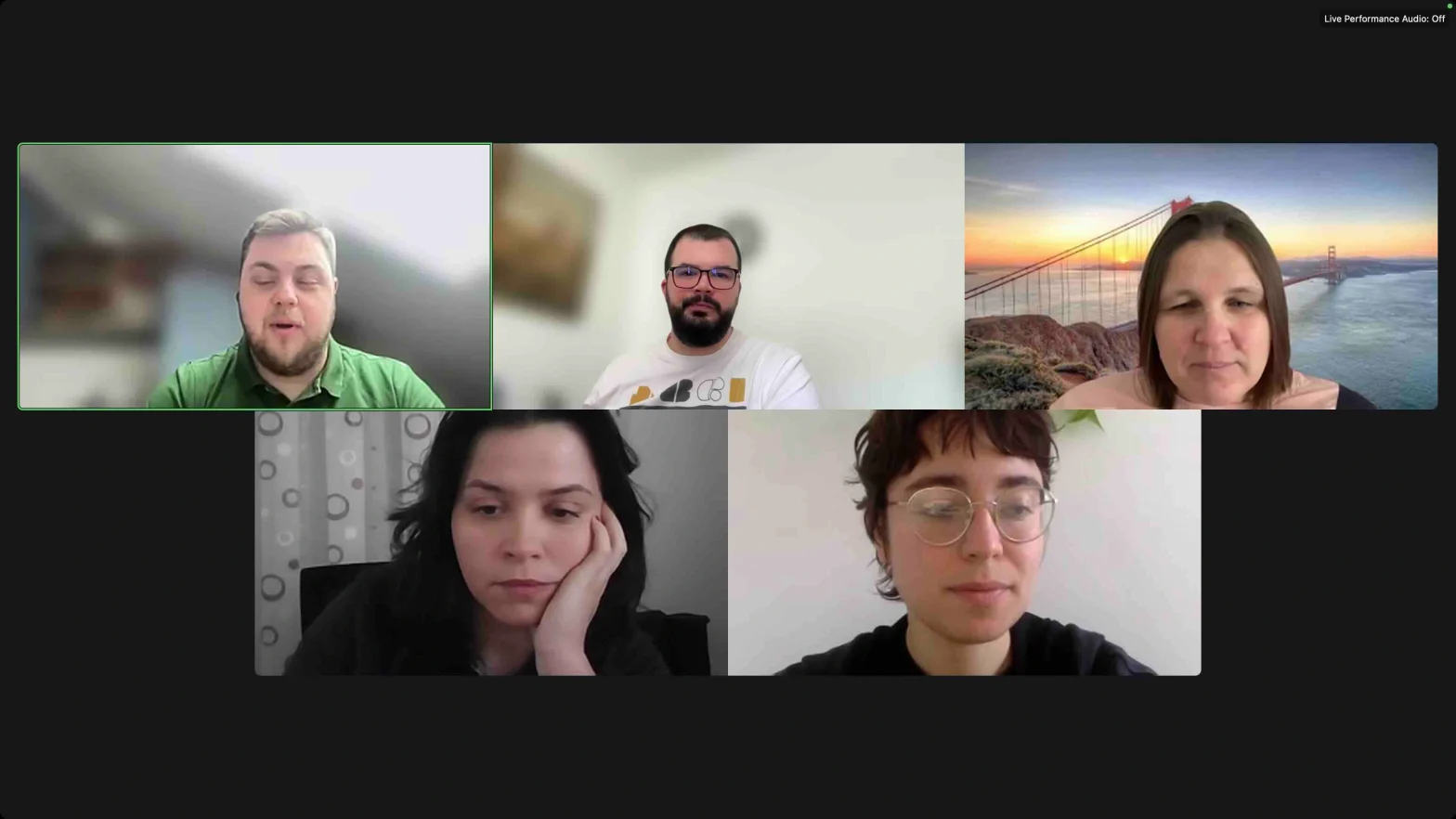
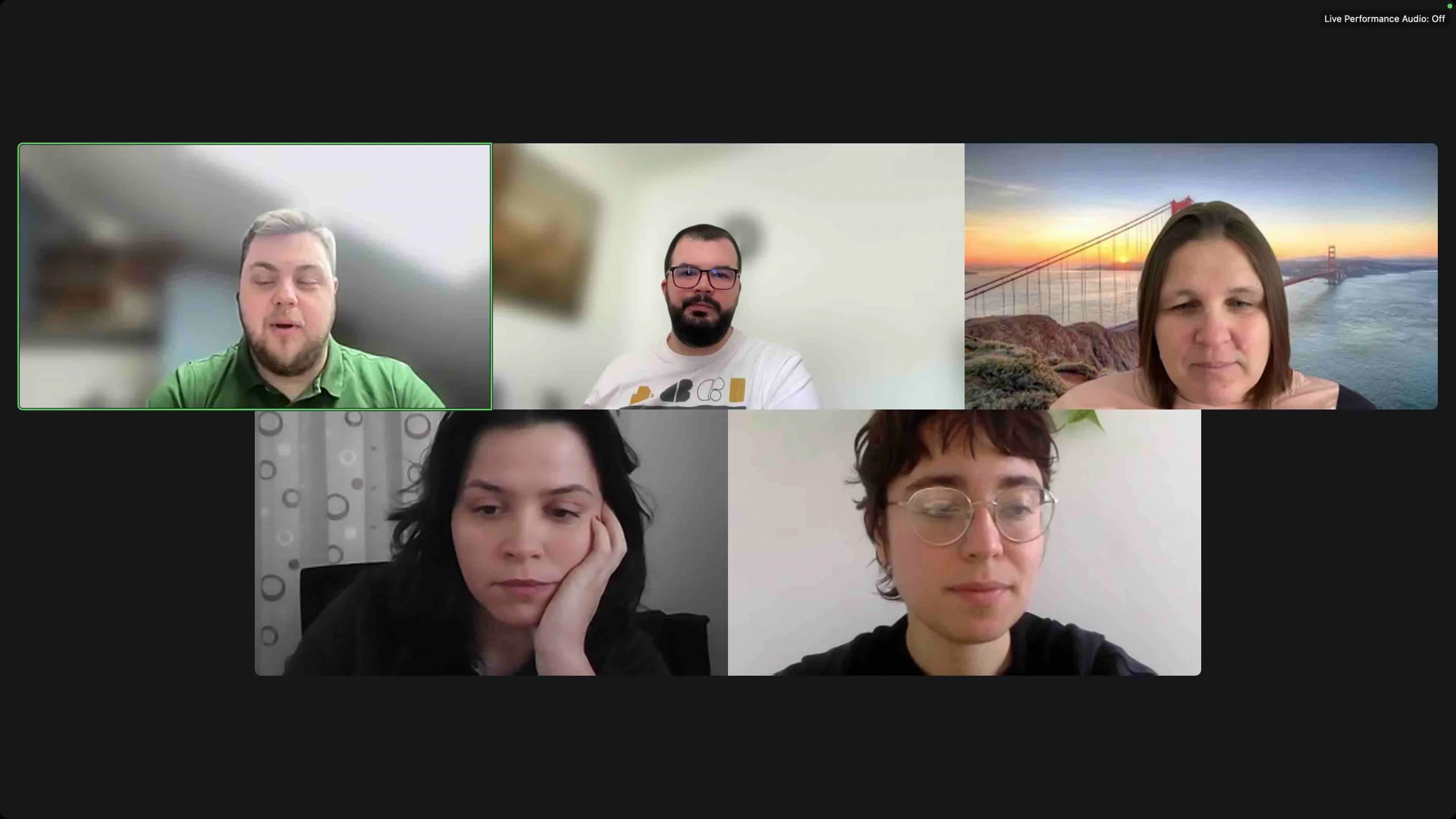
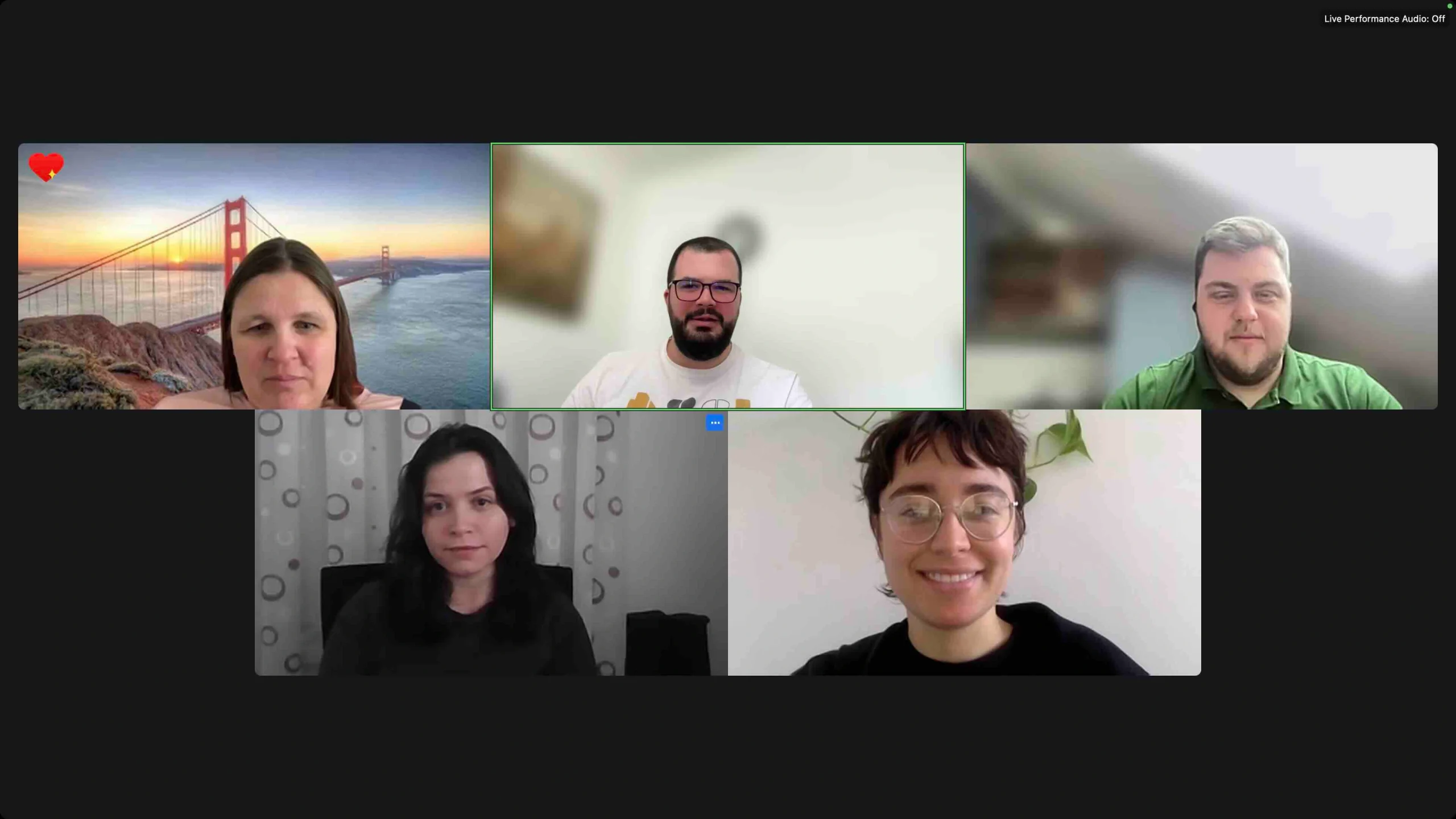
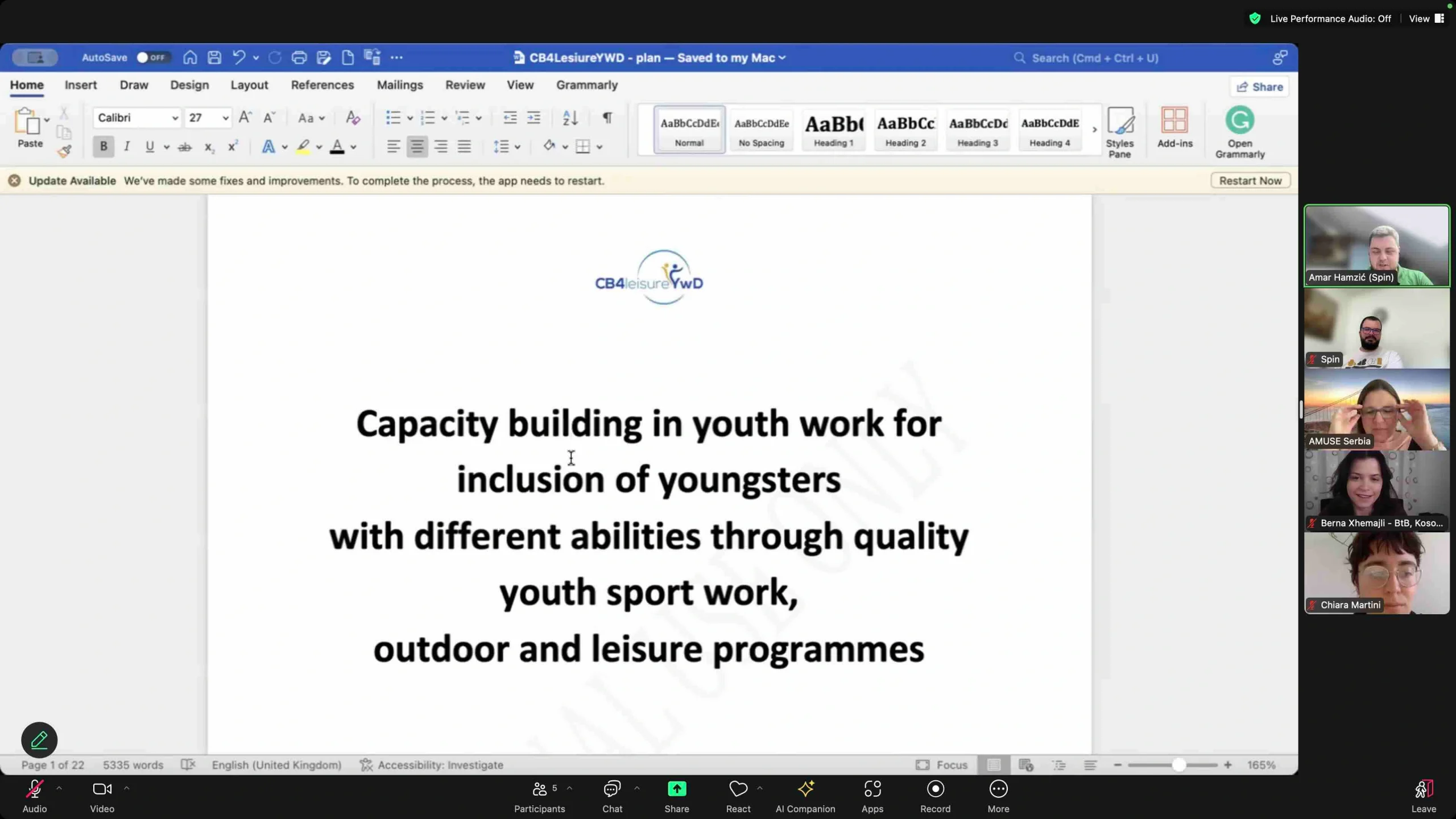
Every project begins somewhere. For CB4leisureYwD, that beginning took shape on 29 April 2025, when representatives of all four partner organisations came together for the project’s kick-off meeting – the first time the full team gathered to set the foundations for the work ahead.
The meeting brought together youth workers, project coordinators and educators from Bosnia and Herzegovina, Kosovo, Serbia and Italy. Four countries, one shared goal: building more inclusive environments for young people with disabilities through sport, outdoor and leisure activities.
For those outside the world of international projects, a kick-off meeting might sound like little more than a formality – a box to tick before the real work starts. In practice, it is something more important than that.
A transnational project like CB4leisureYwD depends on trust and clear communication between organisations that operate in different languages, different legal contexts and different professional cultures. The kick-off meeting is where that foundation gets built – where teams get to know each other as people, not just as names on a partnership agreement, and where the shared understanding that makes good collaboration possible begins to develop.
The meeting covered the full scope of what it takes to get a project like this off the ground. Partners reviewed the project implementation plan together, aligned on roles and responsibilities, and established a regular meeting schedule that will keep the consortium connected throughout the project’s two-year duration.
The project’s visual identity was also presented – the CB4leisureYwD logo and communication guidelines that will give the project a consistent and recognisable presence as it develops. Partners agreed to launch the project’s social media channels in the week following the meeting, marking the first public-facing step of the project’s life.
Practical matters were addressed as well: the shared digital workspace that will be used to organise project documents and track progress, the financial reporting processes, and the contracting arrangements between the coordinating organisation and its partners. These may be less visible than the educational outputs the project will produce, but they are what makes it possible to produce them reliably and accountably.
With the foundations in place, the work on the first project output begins almost immediately. The team will start developing a manual for youth workers on changing the way civil society thinks about and relates to people with disabilities – a resource designed to shift the conversation from seeing young people with disabilities as people who need, to recognising them as people who give.
It is an ambitious starting point. But then, so is the project.