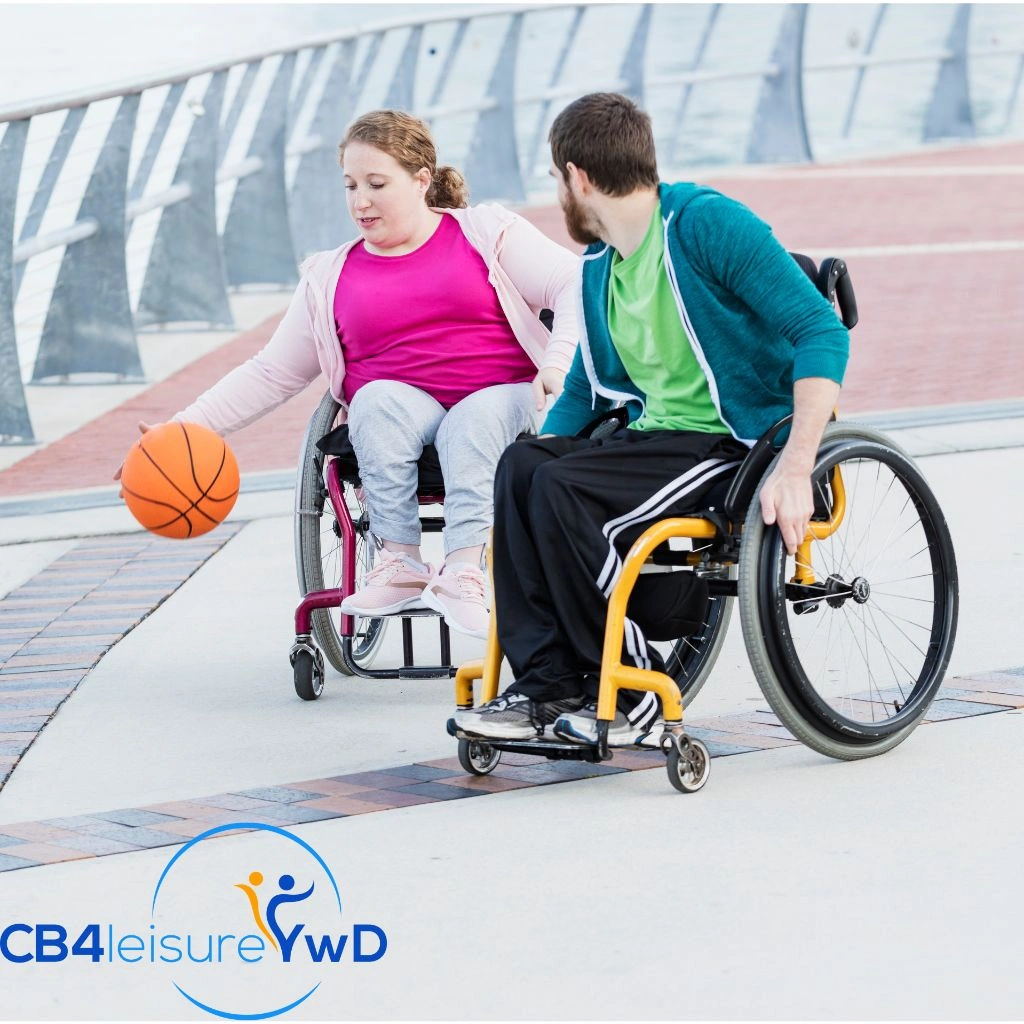
When we talk about inclusion for young people with disabilities, the conversation often focuses on education and employment – two areas that are undeniably important and that receive significant attention from policymakers and researchers alike. Sport, outdoor activities and leisure tend to receive less focus. They can seem peripheral, secondary, even optional.
CB4leisureYwD starts from a different position: that sport and leisure are not secondary to inclusion. They are one of its most powerful and most underused engines.
The evidence for this comes from multiple directions. Research from the World Health Organisation consistently shows that physical activity contributes to improved muscle strength, flexibility and overall physical health for young people with disabilities – benefits that can directly support greater autonomy and independence in daily life. But the social dimensions of sport and leisure are equally significant, and perhaps even more so.
Sport creates social spaces. It brings people together around a shared activity, a shared effort, a shared experience. In those spaces, the usual social divisions – including the divide between people with and without disabilities – tend to matter less. What matters is the game, the trail, the activity. And it is precisely in these moments that meaningful connections are formed, stereotypes are challenged and a genuine sense of belonging can develop.
For young people with disabilities, access to these spaces is far from guaranteed. Participation rates in sport and leisure activities are up to three times lower than for peers without disabilities. This is not because young people with disabilities are less interested in sport or leisure – it is because the environments, programmes and staff are often not equipped to include them. Facilities are not adapted. Programmes are not designed with diverse abilities in mind. Youth workers lack the training to facilitate inclusive participation confidently.
These are not insurmountable problems. They are, in large part, problems of capacity – and capacity can be built. That is what CB4leisureYwD sets out to do: equip youth workers, organisations and communities with the knowledge, tools and confidence to open up the social spaces that sport and leisure create to every young person, regardless of their abilities.