So you want to be more inclusive – but where do you start?

So you want to be more inclusive – but where do you start?

For many youth workers and youth organisations, the desire to be more inclusive of young people with disabilities is genuine and long-standing. The question is not whether to do it – it is how. And that question, in practice, can feel overwhelming.


Where exactly do you begin? Do you start with the physical space – making sure it is accessible? With the programme design – adapting activities so that everyone can participate? With the way you communicate – ensuring that information reaches people in formats they can use? With your own knowledge and assumptions – examining the attitudes and beliefs that shape the way you work?


The honest answer is that all of these things matter, and that change in one area without change in others tends not to stick. But this does not mean that you need to transform everything at once. It means starting somewhere, being intentional about it, and building from there.


One of the most common barriers youth workers report is not a lack of willingness but a lack of confidence. Working with young people with disabilities can feel unfamiliar, particularly for youth workers who have not had specific training in this area. There is often a fear of getting it wrong – of saying the wrong thing, of not knowing how to adapt an activity, of not understanding what a particular young person needs.


This fear is understandable, but it is also something that can be addressed through the right kind of support. Not through abstract theory alone, but through practical, usable tools that give youth workers concrete starting points – workshop designs they can actually run, guidance on adapting spaces and equipment, frameworks for thinking about inclusion that they can apply in their specific context.


This is the kind of support that CB4leisureYwD aims to provide. The resources developed through the project – manuals, toolkits, online courses and a full curriculum – are all designed to be practical and accessible, built on real experience and tested with real youth workers. They are not prescriptions for what inclusion must look like, but tools to help organisations find their own version of it.


The starting point is different for every organisation. What matters is that there is one.

Freed-Home City Fair: Inclusive Independent Living

Freed-Home City Fair: Inclusive Independent Living

This video presents Freed‑Home, an inclusive project developed in Cento by the Don Giovanni Zanandrea Foundation and shared within the CB4Leisure framework.


It focuses on pathways toward independent living for young people with disabilities, going beyond simply living in an apartment to developing autonomy, decision‑making, and responsibility.


The video shows young participants engaging in everyday activities and representing the project during a public city fair.


By bringing domestic objects and shared spaces into the public context, the project makes independence visible and accessible to the wider community.


Inclusion is presented as active citizenship, showing young people as protagonists who belong to and shape community life.

Inclusive Theatre Performance

Inclusive Theatre Performance

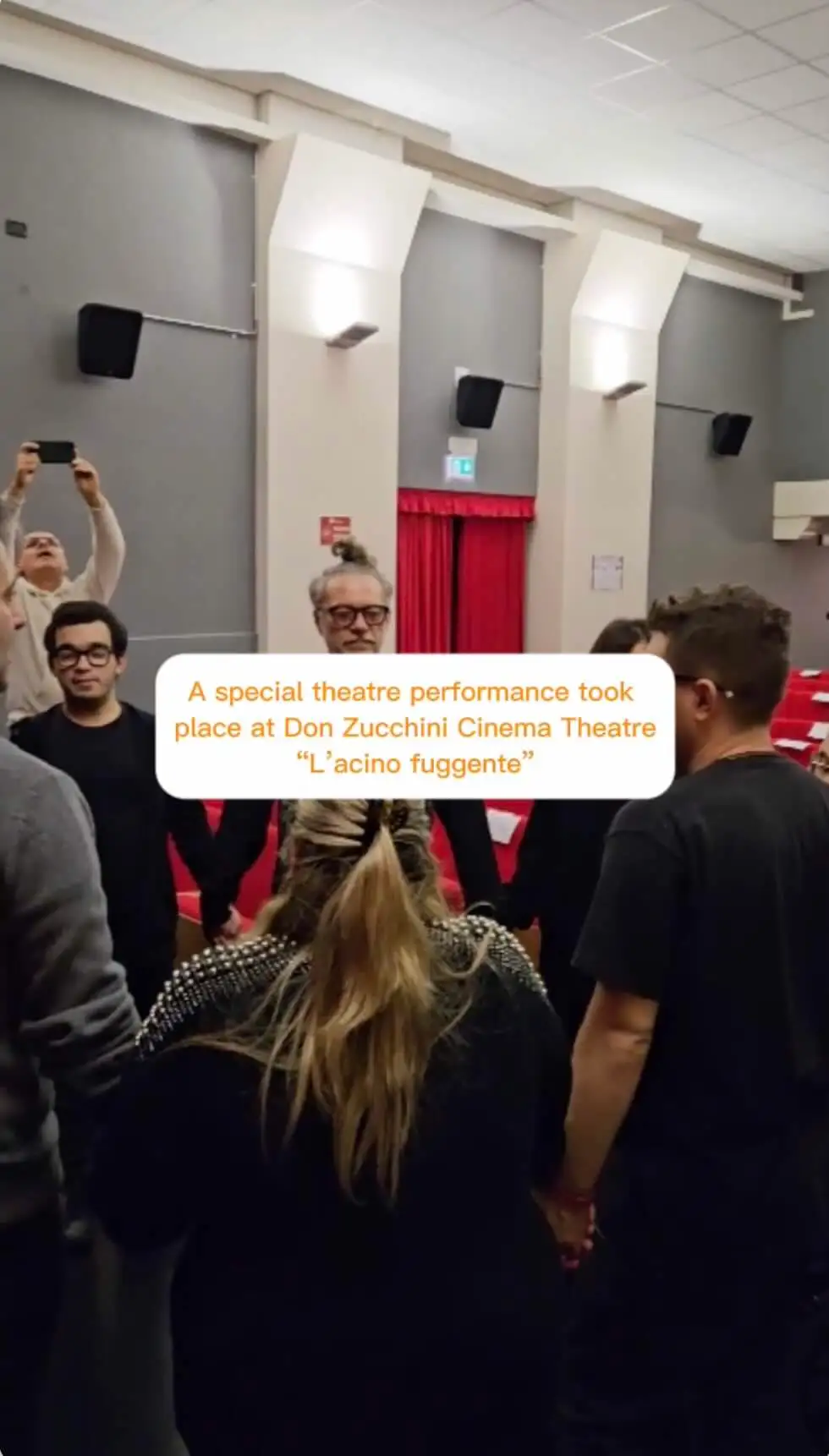
This video presents L’acino fuggente, an inclusive theatre performance created by Compagnia della Criniera in collaboration with the Don Giovanni Zanandrea Foundation, and shared within the CB4Leisure context.
The performance represents the final outcome of a theatre workshop involving young people with disabilities, guided by professional actors and playwrights.


The video shows young participants on stage at the Don Zucchini Cinema Theatre in Cento, working with music, rhythm, movement, and collective expression.
It highlights the creative process as a space for experimentation, learning, and shared enjoyment.
Inclusion is presented as co-creation and participation, where theatre becomes a tool for expression, relationship-building, and belonging.

Inclusive dance: spontaneous art performance

Inclusive dance: spontaneous art performance

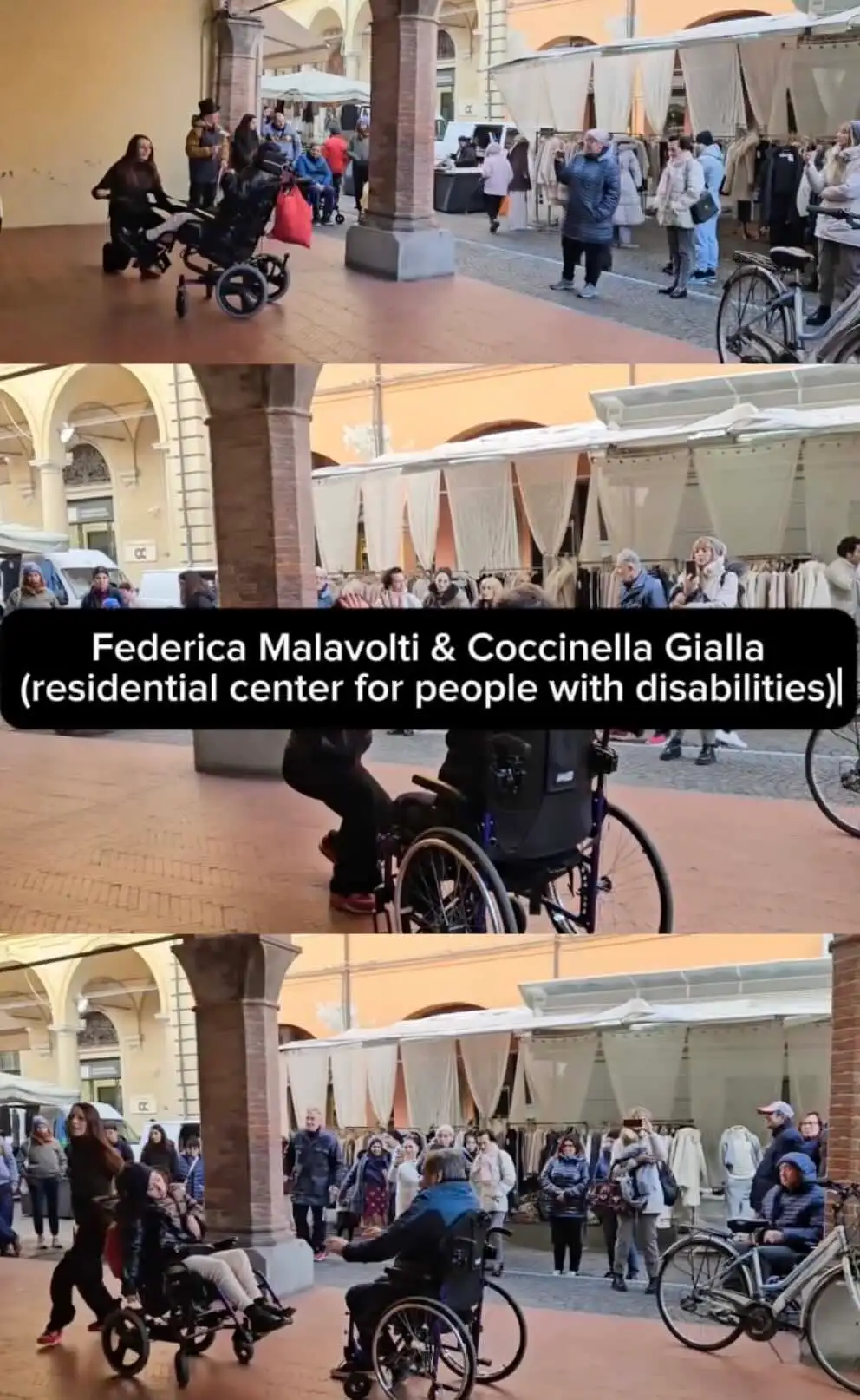
This video documents a spontaneous inclusive art performance that took place in the main square of Cento during the local market.

The performance involved Federica Malavolti and participants from Coccinella Gialla, a residential center for people with disabilities.


Through music and improvised dance‑theatre, two young people using wheelchairs and a third people with cognitive disability performed in a public space, naturally engaging passers‑by.


The video captures everyday reactions, curiosity, and interaction between performers and the public.


Inclusion is presented as presence and visibility, showing how art can transform ordinary public spaces into moments of connection and shared experience.

Baskin: Inclusive Basketball

Baskin: Inclusive Basketball

This video documents the sharing of Baskin, an inclusive basketball practice, within the framework of the CB4Leisure project.


It shows how Baskin brings together people of different ages, genders, and ability levels, promoting equal participation through adapted rules and shared roles.


The video features young people with disabilities alongside other participants, supported by youth workers, actively playing and explaining the values of the sport.


Baskin is presented not only as a physical activity, but as a tool for social inclusion, cooperation, and mutual respect.


Inclusion emerges through teamwork and accessibility, demonstrating how sport can create spaces where everyone can actively belong.

Why this work only makes sense across borders

Why this work only makes sense across borders

It would have been simpler, in many ways, to design CB4leisureYwD as a national project. Each of the partner organisations could have worked within their own country, developed resources for their own context, trained youth workers in their own communities. Simpler to manage, simpler to coordinate, simpler to report on.


But it would have been significantly less useful – and significantly less honest about the nature of the challenge.


The barriers that young people with disabilities face when trying to access sport, outdoor and leisure activities are not unique to Bosnia and Herzegovina, or to Italy, or to Serbia, or to Kosovo. They are shared across borders, across languages, across different legal and policy frameworks. Youth workers in Sarajevo and youth workers in Bologna are grappling with versions of the same problem. The specific details differ – the regulations, the resources available, the cultural context – but the core challenge is recognisable everywhere.


Working transnationally means being able to learn from those differences rather than being limited by them. A practice that has worked well in one country can offer real insights to organisations in another – not as a model to copy, but as a starting point for thinking differently. The diversity of experience across the partnership is one of its greatest assets.


It also means that the resources developed through CB4leisureYwD are stronger for having been shaped by multiple perspectives. A toolkit developed by organisations from four countries, drawing on research and practice from four different contexts, and tested with youth workers and young people across all four, is a more robust and more widely applicable resource than one developed in a single national setting.


And finally, working transnationally matters because the field of inclusive youth work itself is transnational. Youth workers, educators and organisations across Europe face the same questions, read the same research, attend the same training events and draw on the same pool of ideas. The conversations that shape the field happen across borders.

CB4leisureYwD contributes to those conversations – and the resources it produces, available in five languages and freely accessible online, are designed to reach far beyond the four countries of the partnership.

Freedhome Conference: Inclusive Independent Living

Freedhome Conference: Inclusive Independent Living

This video documents the participation of young people from the Freed‑Home Project, developed by the Don Giovanni Zanandrea Foundation in Cento, at a public institutional conference.


It shows young participants taking the stage and speaking directly about their paths toward independent living.


Through their own words, they reflect on challenges encountered, personal growth, responsibility, and autonomy in everyday life.


The video highlights self‑advocacy, with participants explaining concrete experiences and future plans in a public setting.


Inclusion is presented as active participation and listening, where young people are recognized as competent voices and protagonists of their own stories.

Why sport? The case for leisure and physical activity as tools for social inclusion

Why sport? The case for leisure and physical activity as tools for social inclusion

When we talk about inclusion for young people with disabilities, the conversation often focuses on education and employment – two areas that are undeniably important and that receive significant attention from policymakers and researchers alike. Sport, outdoor activities and leisure tend to receive less focus. They can seem peripheral, secondary, even optional.


CB4leisureYwD starts from a different position: that sport and leisure are not secondary to inclusion. They are one of its most powerful and most underused engines.


The evidence for this comes from multiple directions. Research from the World Health Organisation consistently shows that physical activity contributes to improved muscle strength, flexibility and overall physical health for young people with disabilities – benefits that can directly support greater autonomy and independence in daily life. But the social dimensions of sport and leisure are equally significant, and perhaps even more so.


Sport creates social spaces. It brings people together around a shared activity, a shared effort, a shared experience. In those spaces, the usual social divisions – including the divide between people with and without disabilities – tend to matter less. What matters is the game, the trail, the activity. And it is precisely in these moments that meaningful connections are formed, stereotypes are challenged and a genuine sense of belonging can develop.


For young people with disabilities, access to these spaces is far from guaranteed. Participation rates in sport and leisure activities are up to three times lower than for peers without disabilities. This is not because young people with disabilities are less interested in sport or leisure – it is because the environments, programmes and staff are often not equipped to include them. Facilities are not adapted. Programmes are not designed with diverse abilities in mind. Youth workers lack the training to facilitate inclusive participation confidently.


These are not insurmountable problems. They are, in large part, problems of capacity – and capacity can be built. That is what CB4leisureYwD sets out to do: equip youth workers, organisations and communities with the knowledge, tools and confidence to open up the social spaces that sport and leisure create to every young person, regardless of their abilities.

Priručnik “Obuka i osnaživanje omladinskih radnika i edukatora zapodizanje svijesti civilnog društva o uključivanju osoba s invaliditetom”

Priručnik “Obuka i osnaživanje omladinskih radnika i edukatora zapodizanje svijesti civilnog društva o uključivanju osoba s invaliditetom”

Priručnik “Osnaživanje omladinskih radnika i edukatora za podizanje svijesti civilnog društva o inkluziji osoba s invaliditetom” razvijen je kao odgovor na rastuću potrebu za inkluzivnim praksama u radu s mladima i obrazovanju.


Glavna tema je socijalna inkluzija mladih osoba s invaliditetom (MOSI), kojoj se pristupa kroz podizanje svijesti, jačanje kapaciteta i aktivno uključivanje u zajednicu.

Manuale “Formazione e empowerment di operatori giovanili ed

Manuale “Formazione e empowerment di operatori giovanili ed

Il Manuale “Formare e potenziare gli operatori giovanili e gli educatori per sensibilizzare la società civile sull’inclusione della disabilità” è stato sviluppato in risposta alla crescente necessità di pratiche inclusive nel lavoro e nell’educazione giovanile.


Il tema principale è l’inclusione sociale dei giovani con disabilità (YWD), affrontata attraverso la sensibilizzazione, lo sviluppo delle capacità e un coinvolgimento attivo della comunità.